
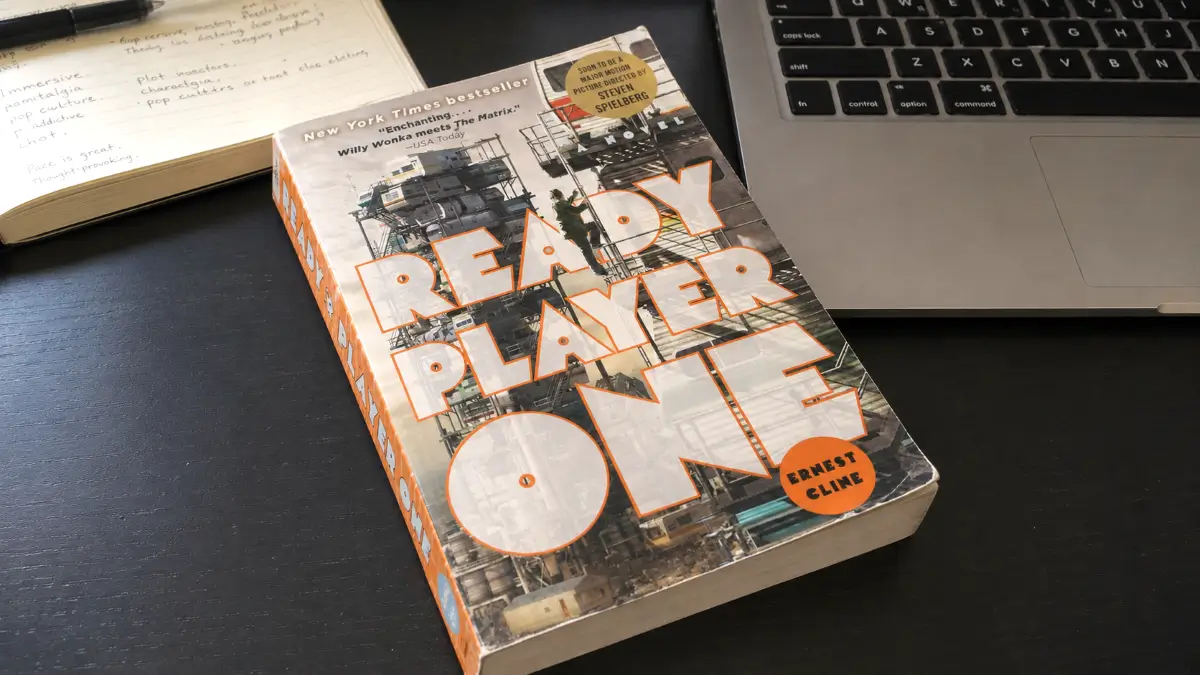
📖 Book Review: At a Glance
| ⭐ Our Rating | My rating 3.8 - Amazon rating 4.6 |
| 📖 Genre | Sci-Fi Adventure / Dystopian VR Fiction |
| ⚡ One-Line Summary | A teenage gamer hunts a digital Easter egg inside a collapsing future. |
| 🎯 Best For | Gamers, VR fans, 80s pop-culture lovers, nostalgic sci-fi readers |
| ⏱️ Est. Reading Time | 6–8 hours |
| 🧠 Difficulty Level | Easy |
| 🎭 The Mood | Nostalgic, fast-paced, geeky, escapist |
| 🎧 Audiobook Quality | Strong narration, especially enjoyable for gaming and pop-culture references |
| ⚠️ Reader Warning | Strong language, mature sexual references, violence, heavy 80s name-dropping |
| 💡 Key Takeaway | Virtual escape feels powerful, but real human connection matters more |
| ✍️ Famous Quote | "Reality is the only thing that’s real." |
Purchasing Note: As an Amazon Associate, Zynqle earns from qualifying purchases. Some of the links in this book review are affiliate links, meaning we may earn a small commission if you make a purchase through them, at absolutely no extra cost to you. This helps support our work in bringing you detailed literary reviews.
Content & AI Usage Policy: All book reviews, opinions, and critiques shared on Zynqle are 100% original and authored by our team. We believe in authentic, human-generated analysis of literature. We only utilize AI tools strictly for assistance with structuring, formatting, and grammar correction to provide you with a seamless reading experience. Every insight, thought, and word evaluating the book is completely our own.
When Ernest Cline’s debut sci-fi adventure captured the publishing world’s attention with a major rights acquisition in 2010 and officially hit shelves in August 2011, it instantly sparked a massive wave of 80s nostalgia. But over a decade later, does this virtual reality treasure hunt still deliver the thrilling experience readers originally raved about? In this book ready player one review, I’ll examine whether Cline’s dystopian adventure holds up for today’s readers, separating the genuine narrative triumphs from the nostalgic hype.
We will explore the novel’s core plot, weigh its biggest pros and cons, evaluate parental and faith-based concerns, dive into what online communities think, and determine if the sequel is worth your time.
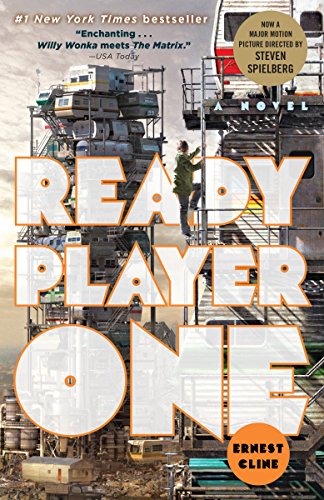
Quick Verdict: Is It Worth Your Time?
If you don’t have time to read the full review, here is my fast, honest take on the book:
- My Rating: ⭐⭐⭐⭐☆ (3.8/5 Stars)
- The Verdict: While the pacing can drag under the weight of heavy exposition, Ready Player One remains an incredibly fun, fast-paced, and imaginative escape for anyone who loves gaming, tech culture, and retro sci-fi.
- Who Should Read It: Gamers, VR enthusiasts, 80s pop-culture nerds, and readers looking for a high-stakes, nostalgic adventure.
- Who Should Skip It: Readers who prefer deep, character-driven literary sci-fi, or those who easily get annoyed by endless pop-culture name-dropping and list-making.
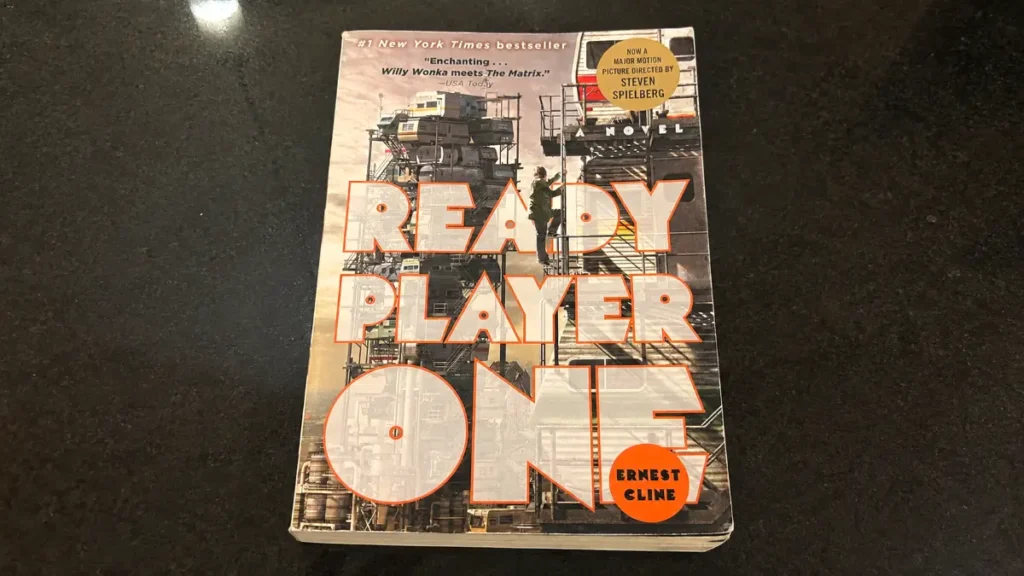
What Is Ready Player One And Who Should Read It?
Ernest Cline published Ready Player One in 2011 as his debut novel. He paints a grim picture of the year 2045, where reality on Earth has become thoroughly unbearable. Climate change, energy crises, poverty, and social decay have forced humanity into cramped, desperate living conditions.
Wade Watts, a resourceful but isolated teenager living in “the Stacks”-a vertical trailer park on the outskirts of Oklahoma City-escapes his bleak life by logging into the OASIS. The OASIS is a globally networked, fully immersive virtual reality universe that serves as humanity’s primary economic, educational, and social playground.
The Premise: Virtual Reality Easter Egg Hunt
The plot kicks into high gear with the death of James Halliday, the eccentric, brilliant creator of the OASIS. Lacking heirs, Halliday leaves behind a digital will in the form of an elaborate contest: an Easter egg is hidden somewhere deep within his virtual world. The first player to find it will inherit his trillion-dollar fortune and total control over Gregarious Simulation Systems (GSS), the company that runs the OASIS.
Because the OASIS economy is worth billions, possibly trillions of dollars, the stakes are life-and-death. To win, “Gunters” (egg hunters) must find three hidden keys and unlock three hidden gates. The twist? Every single clue, puzzle, and challenge is rooted in Halliday’s lifelong obsession with 1980s pop culture—including vintage arcade games, classic movies, television shows, and synth-pop music.
⚠️ SPOILER WARNING: The following sections discuss major plot elements, specific puzzle solutions, character deaths, and key moments from the book’s second half.
The OASIS World And Easter Egg Hunt Experience
The world-building of the OASIS is easily one of the book’s strongest assets. Cline masterfully explains how a digital economy can supersede real-world currency, showing that virtual coins hold more stability than real-world dollars.
The Three Keys And Three Gates Challenge
The hunt itself is a masterclass in puzzle design, even if some of the solutions lean heavily on incredibly specific trivia.
- The Copper Key: Hidden on the school world of Ludus inside a replication of the classic Dungeons & Dragons module “Tomb of Horrors.” Wade must defeat the Demilich Acererak in a best-of-three matchup of the 1982 arcade game Joust.
- The Jade Key: Found on a planet modeled after retro gaming, requiring players to collect all 19 treasures in the text-adventure classic Zork while blowing a Cap’n Crunch Bo’Sun Whistle to access the gate.
- The Crystal Key: Located on planet Syrinx, where contestants must play the classic game Adventure on an Atari 2600 to find the very first video game Easter egg.
The Threat of IOI and Nolan Sorrento
Standing in Wade’s way is Innovative Online Industries (IOI), a predatory multinational corporation led by the ruthless Nolan Sorrento. IOI employs thousands of salaried gamers, known mockingly as “Sixers” (due to their six-digit employee numbers), to systematically search for the egg.
If IOI wins, they plan to monetize the OASIS, charge subscription fees, and destroy the free, open-access nature of the digital world. The corporate threat becomes chillingly real when Sorrento bombs Wade’s trailer park home, killing his aunt and dozens of innocent neighbors, proving they will stop at nothing—even real-world murder—to win.
Wade Watts As Protagonist: Character Strengths And Major Flaws
Operating under his virtual avatar name, Parzival, Wade is a frustratingly flawed hero. His absolute obsession with James Halliday is both his greatest superpower and his deepest psychological crutch.
Parzival’s Intelligence And Gaming Knowledge
Wade’s dedication is unparalleled. Over a five-year period, he logs over 21,975 hours of research studying Halliday’s “Anorak’s Almanac.” He memorizes movies like Monty Python and the Holy Grail word-for-word, masters classic games, and absorbs an impossible volume of media. This makes him a classic, highly capable underdog whom readers want to root for against a corporate monolith.
The Missing Heart: Arrogance and Isolation
However, reading Wade’s internal monologue can occasionally be a frustrating experience. He begins the book as an avowed “agoraphobic shut-in,” entirely disconnected from humanity.
My biggest critique of Wade is his gatekeeping attitude. Instead of sharing a pure, joyful enthusiasm for his hobbies, his exhaustive explanations of 80s culture can read like an elitist trying to prove he is the “ultimate fan.” He frequently belittles other characters who don’t share his exact levels of trivia knowledge, which occasionally makes him hard to like.
Additionally, critics often point out the narrative’s time management and memory issues. Wade claims to have acquired world-class, frame-perfect mastery of hundreds of retro video games, movies, and albums while simultaneously maintaining a straight-A average in virtual high school. It pushes the boundaries of suspension of disbelief, which raises credibility concerns in this book ready player one review.
Fortunately, Wade does experience genuine character growth. His relationships with Art3mis, Aetch, and Shoto teach him that while the virtual world is a comforting escape, real connection can only happen in the messy, imperfect physical world.
Pros and Cons: A Balanced Look
To give you a fair look at whether this novel deserves a spot on your nightstand, here is a breakdown of its strengths and weaknesses:
What I Loved (The Pros)
- Incredible Concept: The idea of a high-stakes, multi-billion-dollar digital Easter egg hunt remains one of the most exciting sci-fi setups of the 21st century.
- Pacing (Once It Starts): Once Wade finds the first key, the book becomes an absolute page-turner. The action set-pieces are brilliantly executed.
- Vivid World-Building: Cline’s description of the OASIS—from its educational sectors to its planetary battlegrounds—is imaginative, immersive, and highly detailed.
What Fell Flat (The Cons)
- Exposition Dumps: The first 70 pages are incredibly slow, serving primarily as an information dump about the history of the OASIS and Halliday’s life.
- Overwhelming “List-Checking”: Sometimes, the references feel like a checklist of names rather than meaningful additions to the story.
- Flawed Romantic Subplot: Wade’s obsession with the female Gunter Art3mis sometimes borders on unhealthy, stalker-like infatuation before they meet in real life.
The 80s Pop Culture Problem: Nostalgia Overload Or Perfect Homage?
The polarizing nature of Ready Player One hinges entirely on its relentless use of 80s trivia. For some, it’s a brilliant love letter to a golden era of geek culture; for others, it’s an exhausting barrage of name-dropping.
The Pacing Bottleneck
The early pacing is a common complaint. Many readers feel that the story is bogged down by exposition because Cline spends pages meticulously detailing the mechanics of an obscure arcade cabinet or summarizing the plot of an old movie. Rather than driving the plot forward, these passages can feel like reading a Wikipedia article.
The Generation Gap
There is also a striking generational gap in how readers receive the book. Wade is an 18-year-old living in 2045, yet his entire personality is built around a cultural era that occurred 60 years prior. Younger Gen Z and Gen Alpha readers may find the references completely alien, making the book’s core puzzle mechanic feel more like homework than a thrilling mystery.
Community & Niche Perspectives
To provide a fully rounded analysis, let’s explore how different groups of readers view this highly discussed novel.
The Internet’s Verdict: Reddit Reader Opinions
When searching for a ready player one book review reddit discussion, you’ll notice a massive divide between casual readers and critical analysis groups. On gaming and sci-fi subreddits, the community generally celebrates the book as a “guilty pleasure” and a fun, breezy read. However, on more literary-focused subreddits like r/books, users frequently roast Cline’s prose style, pointing out repetitive sentence structures and Wade’s occasionally toxic traits. The consensus on Reddit is clear: read it for the thrilling plot and cool concept, not for high-level literary prose.
Guide for Families: Parent Review & Age Suitability
For families considering this for younger readers, a ready player one book parent review must highlight that while the book looks like a fun kid-friendly adventure, it contains mature themes.
- Language: There is frequent strong language (including the F-word).
- Sexual Content: Wade describes virtual adult entertainment options in the OASIS, and there are brief references to masturbation and sexual situations.
- Violence: There is real-world violence, including corporate murders, bombings, and the suicide of a major character.
- Recommended Age: Best suited for mature teens aged 14 and up.
A Faith-Based Lens: Christian Review Concerns
From a faith-based perspective, a ready player one book christian review should note the book’s heavily secular worldview. Wade explicitly states early in the book that he does not believe in God, comparing religion to a comforting simulation. Additionally, James Halliday is depicted as an almost god-like figure whose texts (the Almanac) are treated as sacred scripture by his followers. Parents and Christian readers may want to use these elements as a springboard for discussions about faith, escapism, and finding true meaning in the real world rather than digital illusions.
Book vs. Movie: How Spielberg Adapted the Hunt
Steven Spielberg’s 2018 film adaptation is a very different beast than the novel. Due to strict licensing limits and the pacing demands of cinema, Spielberg streamlined the plot significantly.
Instead of Wade playing a text-adventure game or sitting through WarGames reenactments, the film features high-octane sequences like a chaotic New York City car race and a battle inside Stanley Kubrick’s The Shining. The movie is vastly more visual and accessible to general audiences, but it sacrifices almost all of the book’s deep-dive trivia and intellectual puzzle-solving. If you preferred action over puzzle-solving, you might prefer the film; if you liked the nerd-heavy mystery, the book wins.
The Sequel: Ready Player One vs. Ready Player Two
If you finish the first book and find yourself wanting more, you might look toward the 2020 sequel, Ready Player Two.
However, if you’re hunting for a ready player one 2 book review to see if the sequel is worth your time, the short answer is: proceed with caution. The sequel introduces a direct neural interface (ONI) that allows users to physically feel and experience the OASIS, but the plot heavily recycles the structure of the first book with even more obscure, exhausting trivia lists (such as an entire section dedicated to Prince). Most readers agree that it lacks the charm, novelty, and heart of the original.
2026 Franchise Update: The Graphic Novels Are Coming
The OASIS is finding fresh life beyond the original text. On October 6, 2026, Del Rey is releasing a highly anticipated official full-color graphic novel adaptation of Ready Player One, illustrated by Meredith Laxton and adapted by Scott Peterson. This launch is bringing the visual grandeur of the OASIS back into the cultural spotlight. Additionally, a graphic novel adaptation for Ready Player Two is already slated for a 2028 release, making this the perfect time for a re-read of the original source material.
Is Ready Player One Still Worth Reading Today?
Ultimately, putting together this book ready player one review forced me to look past the nostalgic glare of the early 2010s. If you’re searching for a definitive ready player one book review to help you decide whether to dive into the OASIS, my final verdict is yes—but with tempered expectations.
Even with its narrative flaws, Wade’s occasionally grating personality, and some seriously dated prose, Ready Player One remains an incredibly entertaining sci-fi novel. Its central warning about the dangers of abandoning our physical world in favor of corporate-owned virtual spaces feels even more relevant today in our era of Apple Vision Pro, AI, and social media dominance than it did in 2011.
It is an imperfect but deeply passionate love letter to the early days of gaming. If you go into it expecting a fun, fast-paced summer blockbuster in written form, you will not be disappointed.
Frequently Asked Questions (FAQs)
Is Ready Player One appropriate for 12-year-olds?
Due to moderate profanity, crude humor, real-world violence (bombings/deaths), and brief references to virtual adult content, it is generally recommended for teens aged 14 and older.
Is the book better than the movie?
This depends on your taste. The book is much more focused on intellectual retro-gaming puzzles, hacking, and deep trivia. The movie is a visually spectacular, action-packed thrill ride that simplifies the puzzles for a mainstream audience.
Is there a Ready Player Three coming out?
Ernest Cline has expressed interest in writing a third book to complete a trilogy, but as of now, no official release date or plot details have been confirmed.