
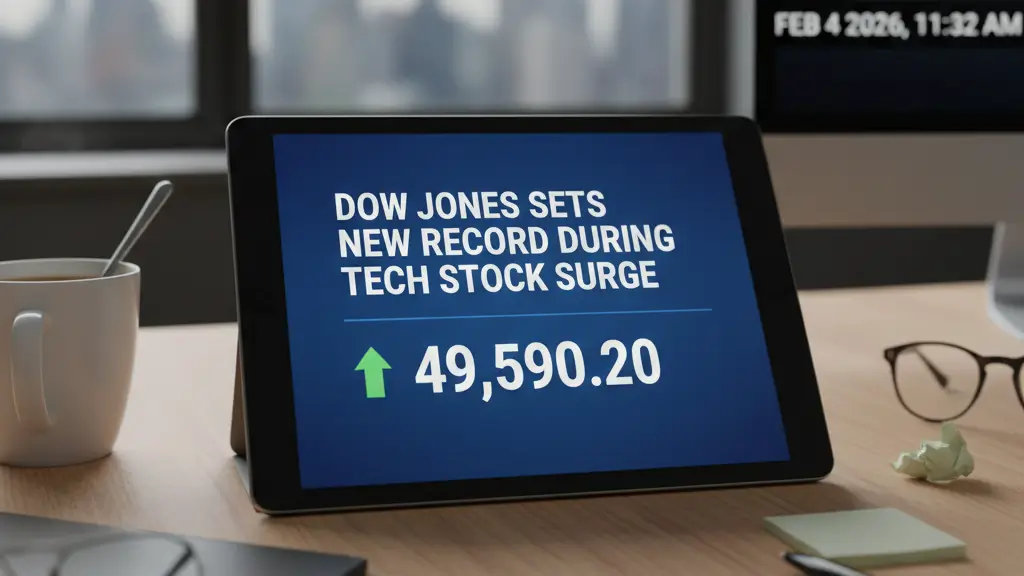
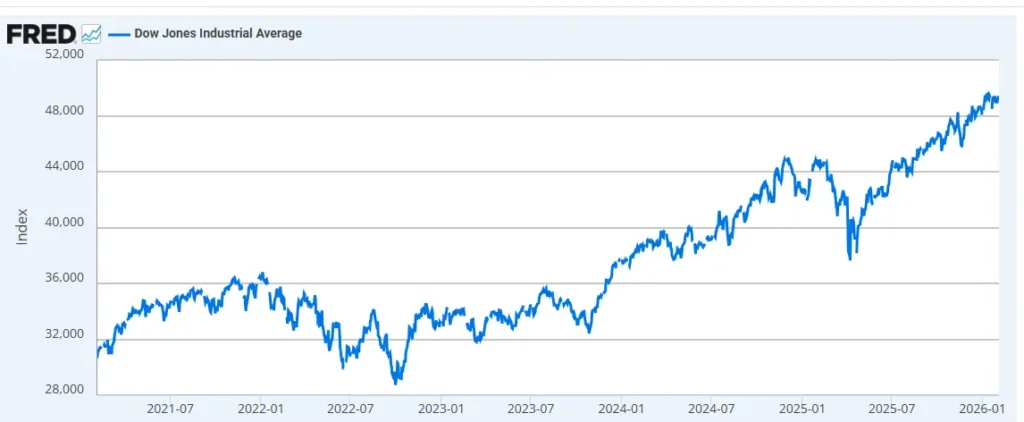
The Dow Jones has climbed to an all-time high marking a significant moment for one of the most recognized and longstanding stock indices. Established in 1896, this classic measure of the U.S. market’s performance shows impressive strength even with the economic challenges still present.
When people check the Dow Jones Industrial Average today, they see it represents the performance of 30 major public companies in the U.S. With a massive market value of $22.9 trillion as of October 31, 2025, this stock market tracker gives important clues about wider economic shifts. While its historical average return has been 8.7% since it began in 1988 through March 2022, the recent rally has gained attention because of the strong performance of the tech sector. This article will explore what’s driving this rise, which stocks are taking the lead, and what investors need to watch as they follow live updates on the Dow Jones.
Key Points
The Dow Jones Industrial Average hit record highs showing a big change in how markets are working. Growing economic strength and a move from tech stocks to older value sectors are fueling this shift.
• The rally relies on strong economic trends: Manufacturing PMI climbed to 52.6%, the best since 2022. GDP grew by 4.4% , and inflation dropped to 2.8%. These conditions are helping markets thrive.
• Investors are turning to stable blue-chip sectors: Stocks in banking, healthcare, and industrials are now beating out tech companies as people choose businesses with steady profits and reliable earnings.
• Dow Theory shows strong bullish signals: Industrial and transportation averages reached all-time highs at the same time. History suggests this points to steady market strength, with an average 12-month return of 11.1%.
• Price-weighting opens unique possibilities: Unlike the S&P 500, which depends on market-cap weighting, the Dow’s price-weighted setup gives more sway to higher-priced traditional stocks. This often helps well-established companies over trending tech firms.
• Keep a close eye on Fed moves and earnings: With one rate cut expected in 2026 and big Dow companies revealing quarterly earnings, these factors will influence the index’s direction in upcoming sessions.
This major event highlights how market leaders keep shifting over time. Investors benefit by spotting when older sectors reclaim their strength during times of economic change.
What caused the Dow Jones Industrial Average to hit new records?
The Dow Jones Industrial Average broke all past records closing at a remarkable 49,590.20 points on January 12, 2026. This continued an impressive upward movement that has caught the attention of markets everywhere. Reaching this historic level reflects a mix of strong economic forces and major changes in how investors are positioning themselves.
Which economic indicators fueled this growth?
Recent data has built a strong base for the Dow’s rise. One standout is the January ISM Manufacturing PMI. It jumped to 52.6% reaching its highest point since 2022 and surpassing the 48.3% forecast. This surge in manufacturing growth was widespread.
- The New Orders Index jumped by 9.7 points reaching 57.1%.
- Factories boosted their production pushing the Production Index up to 55.9%.
- Businesses grew their inventories at the quickest rate seen in several years.
The overall economic outlook appears stronger than before. U.S. GDP for Q3 grew 4.4% , which marked the fastest growth in two years. Meanwhile, inflation eased to 2.8%, according to the Consumer Price Index report from October 2025. Together, these numbers point to a durable economy balancing growth without overheating. This environment has been perfect for the Dow Jones stocks to perform well.
What changes did investors notice this week?
The CNN Money Fear and Greed index showed a clear boost in market sentiment. It hit 61.2 in the “Greed” zone up from 56.1 earlier. This change hints at increasing confidence among investors about the market rally holding strong.
At the same time, there was a major shift as traders started moving away from AI tech stocks and turned to more traditional sectors. Major banks like Goldman Sachs, JPMorgan, and American Express hit record levels. Companies in healthcare and materials industries also saw solid gains. The Dow climbed roughly 430 points at one point reaching an intraday peak of 48,419 before pushing even higher.
As a result, this shift marked a 4% rise in four days. It highlighted how the market sees value-focused stocks with solid cash flows as better options in today’s economy. The Dow climbed by 515 points reaching 49,407.66 showing its recent momentum and the strong trust investors place in traditional blue-chip companies.
How tech stocks are changing the Dow Jones right now
Tech stocks have changed the makeup and performance of the Dow Jones Industrial Average in a big way. This shift is causing investors to pay attention to new areas of the market. The Dow has risen for four days straight crossing 48,000 points for the first time. This also marks its 17th record high this year.
Which stocks in the Dow Jones gained the most?
In recent trading, there has been a visible change in which stocks are leading the market. Some of the top performers in the Dow Jones today include:
- Cisco Systems climbed 3.06% to $83.11
- Walmart went up 2.94% to $127.71
- Chevron moved higher by 2.30% to $178.04
- JPMorgan Chase gained 2.18% to $314.85
- Caterpillar jumped 1.73% to $702.89
Traditional blue-chip companies made the strongest moves occupying most of the top spots in the gainers list. Cisco was the only tech-related business to join the top five. Meanwhile big-name tech firms struggled as Microsoft slid 2.87%, NVIDIA fell 2.84%, and IBM tumbled 6.49%.
What could this mean to traditional industries?
Investor interest is shifting to older industries outside of tech. Jamie Cox from Harris Financial Group said, “The main theme is: Value is back.” The Dow joined rallies thanks to its tech stocks but got dragged down by issues in other areas. Companies in industrials dealt with supply chain problems financial firms faced uncertainty over interest rates, and consumer-focused businesses had a mix of outcomes.
Now older industries seem ready to grow. Sectors like healthcare, industrials, and consumer goods are drawing attention, along with areas like infrastructure, energy, and utilities that lead during economic cycles. Worries about a potential bubble in artificial intelligence have also driven investors to explore reliable Dow components with steady profits outside the tech space.
How is the Dow different from the S&P 500 when it comes to weighting?
One big reason for the difference in recent performance is how they do the weighting. The Dow Jones Industrial Average uses a price-weighted system. This means stocks with higher prices have more influence, no matter how big the company is. For example, if UnitedHealth (priced at about $350 per share) goes up 10%, it adds around 230 points to the Dow. On the other hand, the same 10% jump in Intel (priced around $35 per share) adds about 23 points. Both increase by the same percentage, but their impact on the Dow is very different.
Unlike the Dow, the S&P 500 relies on market capitalization weighting. Larger companies play a bigger role because of their size. This helps explain why the S&P 500 rose by 25% in 2024, compared to the Dow’s 13% gain. The S&P focuses more on technology stocks and less on industrial companies.
What does Dow Theory suggest about this market trend?
Dow Theory created more than a hundred years ago still provides important ideas about today’s market trends. Charles Dow came up with this method, and it continues to be useful to understand how the Dow Jones Industrial Average behaves now.
Do transportation and industrial sectors back up the rally?
The Dow Jones Industrial Average and the Dow Jones Transportation Average have both moved upward from their April lows marking higher peaks. This alignment creates a strong bullish signal. The Dow Theory signaled a buy for the first time in over a year after both averages hit record closing highs on the same day. Over the past six weeks, the transportation index jumped 17% reaching its first record high since late 2024.
What do the volume trends suggest about this rise?
Trading volume has been lower compared to previous months. This may result from a summer slowdown, as trading often eases during this time of year. Investors who stay active should watch volume trends closely. Dow Theory highlights that a rising market should align with increasing trading volume. At the moment, volume supports the market rebound.
Does this indicate a real bull market?
In the past when Dow Theory buy signals appeared, the S&P 500 delivered average 12-month returns of 11.1%. Stocks also ended higher in 83% of those cases. Ralph Acampora co-founder of the CMT Association, said: “It confirms that the secular bull market is alive and well.”
What comes next for investors to focus on?
As markets change , it is important to watch forward-looking indicators . The recent Dow performance suggests that specific elements could steer its path in the next few sessions.
Earnings reports ahead and Federal Reserve policies
It is crucial to track upcoming earnings to make informed investment choices. Major companies in the Dow plan to release their quarterly earnings soon, which might influence market trends. Strong results may drive the index higher.
Investors also need to keep an eye on the Federal Reserve’s approach to interest rates. The central bank indicates it plans just one rate cut in 2026. This forces investors to rethink their long-term strategies. Recent bond yield increases, like the 10-year note climbing five basis points to 4.08%, have put pressure on tech stocks.
Tracking volatility and futures trends
The VIX Index known as the “fear gage” of the market, gauges how investors feel about risk. It often moves in the opposite direction of the S&P 500, which makes it useful to build hedging strategies.
Right now, Dow futures offer early clues about where the market may be heading. Recent updates show futures falling, with Dow futures dropping about 220 points after disappointing tech earnings reports. The market faces a key technical challenge in the support range of 47,800 to 48,000 points.
How to follow Dow Jones live for real-time updates
To monitor the market many platforms give real-time tracking of the Dow Jones. CNBC shares updates every minute with market news and analysis, which helps people keep up with fast-changing market situations.
Conclusion
The Dow Jones Industrial Average reaching new record levels shows a big change in how the market works. A strong economy and falling inflation have made things better for blue-chip stocks to perform well. This achievement proves how strong older non-tech industries can still be in today’s market.
Investors are shifting focus from tech giants to banking, healthcare, and industrial companies to gain value and stability. This move reflects a strategic change and connects with the ideas in Dow Theory where record highs in both industrial and transportation averages often point to lasting market strength.
While tech stocks once pushed the market upward traditional sectors now lead the way. Investors should keep an eye on the Federal Reserve’s upcoming decisions and earnings announcements. They also need to watch technical support levels and signs of market volatility as things progress.
This record-breaking performance shows how market leadership always changes. Tech companies may have led in recent years, but the current rally proves that older Dow companies can take the lead again during times when the economy shifts. Smart investors need to remember that markets change . So instead of chasing hot sectors, they should focus on balanced portfolios that match long-term goals.
Even with economic uncertainties, the Dow’s strong rally highlights how American businesses remain tough and adaptable. Investors should pay attention to new trends while also learning from past market movements to handle this ever-changing investment world. The Dow Jones is still an important measure of market health and keeps evolving as the economy does.